

There is a common misconception that every mile run or weight lifted brings us closer to inevitable joint wear and tear. However, modern orthopedic science suggests the opposite. From preserving natural joints to protecting hip and knee replacements, building muscle plays a critical role in healthy aging. Discover how strength training helps keep your joints stronger, more stable, and functioning longer.

How Strong Muscles Protect Aging Joints
Every time your foot hits the ground, a force multiple times your body weight travels upward. Muscles, specifically the quadriceps, hamstrings, and glutes, act as your body’s primary shock absorbers.
When these muscles are weak, that energy is transferred directly into the joint capsule, putting undue stress on the cartilage. By building stronger "scaffolding," you effectively offload the mechanical stress that leads to osteoarthritis.
Correcting Poor Joint Mechanics With Resistance Exercise
Unlike most tissues, joint cartilage lacks a direct blood supply. It relies on synovial flushing. Weight-bearing exercise acts like a pump, squeezing nutrient-rich fluid into the cartilage to keep it supple. Furthermore, strength training corrects tracking issues. For example, strong hip abductors prevent the knee from caving inward, ensuring weight is distributed evenly across the joint surface rather than concentrated on one hot spot.
Protecting Hip and Knee Replacements With Exercise
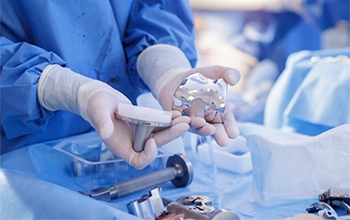
The necessity of strength training does not end if you undergo a hip or knee replacement; if anything, it becomes more critical. While the biological cartilage is replaced by metal and plastic, the longevity of that hardware depends on the "soft tissue envelope" surrounding it.
- Preventing Edge Loading: An implant is designed to wear evenly. Weak muscles can cause the joint to shift slightly, concentrating pressure on the edges of the prosthetic liner. Strong stabilizers keep the components perfectly aligned.
- Bone Integrity: Implants are anchored into your natural bone. Strength training stimulates bone density, ensuring a rock-solid foundation that prevents the implant from loosening over time (aseptic loosening).
- Dampening Impact: Without strong muscles to absorb the "thud" of daily activity, that force travels directly to the bone-implant interface, which can lead to premature failure.
Rebuilding Muscle Balance After Joint Replacement
Most individuals getting a replacement have spent years limping or favoring one side. This creates "learned weakness" and muscle atrophy. Post-operative strength training is essential to break these patterns. Without rebuilding that muscle, you may continue to place uneven stress on your new joint or even cause the other hip or knee to fail due to overcompensation.
Long-Term Joint Health Through Strength Training
The goal of age-related strength training is functional resilience. Prioritizing controlled, low-impact resistance, such as squats, bridges, and band work, ensures that your hardware, whether natural or surgical, remains supported.
By investing in muscle today, you are essentially purchasing an insurance policy for your mobility. Whether you are looking to avoid the operating room or protect a new investment, a strong body remains the best defense against the rigors of aging.
Frequently Asked Questions
1. Can strength training help prevent arthritis?
Strength training can help reduce stress on the joints by improving muscle support, stability, and movement mechanics. While it cannot guarantee arthritis prevention, it may lower the risk of joint degeneration and help manage symptoms.
2. Is strength training safe for older adults with joint pain?
Yes. Low-impact, properly supervised strength training is often recommended for older adults with joint pain or arthritis. Exercises can be modified to improve strength without placing excessive stress on the joints.
3. What are the best exercises for protecting knee and hip joints?
Exercises such as squats, bridges, step-ups, resistance band work, and core strengthening are commonly recommended to support knee and hip stability and improve joint alignment.
4. Can you strength train after a hip or knee replacement?
In most cases, yes. Post-operative strength training is an important part of rehabilitation and helps support the surrounding muscles, improve balance, and protect the longevity of the joint replacement.
5. How often should older adults do strength training for joint health?
Most experts recommend strength training two to three times per week, focusing on controlled movements, proper form, and gradual progression to safely improve joint support and mobility.
Reference Links:
Strength training in older adults: The benefits for osteoarthritis - PubMed Central
AUTHOR: Dr. Nicholas B. Frisch, MD, MBA, FAAOS - Orthopedic Hip & Knee Surgeon
Nicholas B. Frisch, MD, MBA, FAAOS is a board-certified orthopedic surgeon specializing in hip and knee replacement, minimally invasive joint replacement, and complex primary and revision arthroplasty. He practices at Center for Advanced Orthopedics and Sports Medicine in Auburn Hills, Michigan, and serves as Chief of the Department of Surgery at Henry Ford Rochester Hospital.
Credentials & Recognition
Dr. Frisch earned his undergraduate degree from the University of Vermont, his Master's in Medical Science from Loyola University Chicago, and his MD and MBA in Healthcare Management from Tufts University School of Medicine. He received the Norman S. Stern MD|MBA Award for excellence in academics and leadership. Dr. Frisch completed his orthopedic surgery residency at Henry Ford Hospital in Detroit, where he received the 2016 Outstanding Resident Award, and his adult reconstruction fellowship at Rush University Medical Center in Chicago. He is a Fellow of the American Academy of Orthopaedic Surgeons (AAOS) and serves as Health Policy Fellow and Vice Chair of the Young Arthroplasty Group for the American Association of Hip and Knee Surgeons (AAHKS). Dr. Frisch has been recognized as a Top Doctor in Metro Detroit by Hour Detroit and DBusiness magazines from 2022 to present.
Clinical Expertise
Dr. Frisch specializes in minimally invasive hip replacement using anterior and mini-posterior approaches, robotic knee replacement, and outpatient joint replacement procedures. He has published numerous peer-reviewed research articles in leading orthopedic journals including The Journal of Arthroplasty, Arthroscopy Today, and Journal of Surgical Orthopaedic Advances. Dr. Frisch received the 2022 John N. Insall Award from The Knee Society, the 2018 Orthopedics Blue Ribbon Article Award, the 2017 Best Poster in Musculoskeletal Oncology Award at the American Academy of Orthopaedic Surgeons Annual Meeting, and the 2016 Orthopedics Best Clinical Article Award. He serves as Clinical Champion for the Michigan Arthroplasty Registry Collaborative Quality Initiative (MARCQI). Dr. Frisch utilizes efficient pain management pathways and innovative technology to enable rapid recovery and faster return to normal activity for his patients.
Medical Disclaimer: This information is for educational purposes only and does not constitute medical advice. For diagnosis and treatment recommendations, please consult with Dr. Frisch or another qualified orthopedic specialist at FrischOrtho.